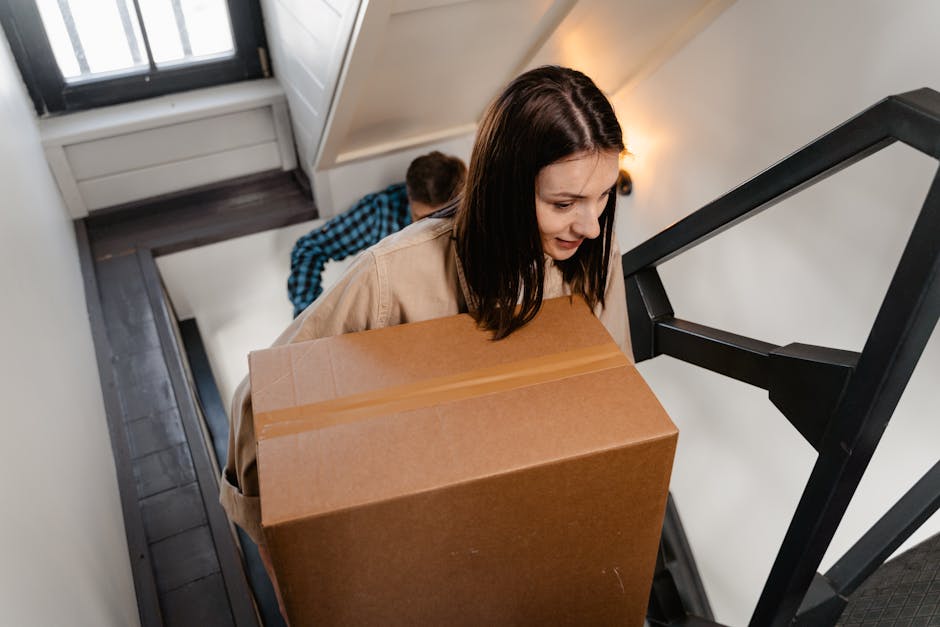
If you live in Paddington, you probably know the feeling: a narrow staircase, a landing that seems to shrink every time you carry a box, and a front door that opens into nowhere useful. Small flat moves can look simple on paper, then turn awkward fast. That is exactly why a staircase-tight move needs a different approach. In this guide, we explain how Staircase tight? Small flat moves in Paddington solved really works in practice, what to expect, and how to avoid the little mistakes that turn a short move into a long day.
Whether you are moving out of a compact studio, a one-bedroom flat with a tricky stairwell, or a top-floor apartment with tight corners, the aim is the same: protect the property, protect your belongings, and keep the whole thing calm enough that you can actually breathe. Let's face it, nobody wants to be that person wedged halfway down the stairs with a mattress and a bad idea.
Below, you will find a clear breakdown of the process, useful comparisons, a practical checklist, and realistic advice for choosing the right moving support in Paddington. If you want a full-service move, it may help to look at flat removals, man and van support, or broader removal services depending on how much help you need.
Table of Contents
- Why Staircase tight? Small flat moves in Paddington solved Matters
- How Staircase tight? Small flat moves in Paddington solved Works
- Key Benefits and Practical Advantages
- Who This Is For and When It Makes Sense
- Step-by-Step Guidance
- Expert Tips for Better Results
- Common Mistakes to Avoid
- Tools, Resources and Recommendations
- Law, Compliance, Standards, or Best Practice
- Options, Methods, or Comparison Table
- Case Study or Real-World Example
- Practical Checklist
- Conclusion
- Frequently Asked Questions
Why Staircase tight? Small flat moves in Paddington solved Matters
In Paddington, small flats often sit in older buildings, converted townhouses, or purpose-built blocks where the access is just a bit awkward. Tight stairs, narrow corridors, low ceilings, and sharp turns are not rare exceptions; they are part of the moving reality. That matters because the move is not only about getting boxes from A to B. It is about doing it without damage, stress, or avoidable delay.
When access is tight, the biggest risks are usually not dramatic. They are the practical ones: scratched walls, chipped bannisters, a sofa that will not angle round the turn, or a move that runs an hour or two longer than planned. Small flats also tend to hide big items. A compact home can still contain a heavy bed base, a bulky wardrobe, or a piano in the corner that nobody remembers until the van is outside. If you are moving a delicate item, it can be worth checking piano removals early rather than hoping for the best.
There is also a timing issue. In a busy London area, access windows, parking, and neighbour considerations can shape the whole day. A well-handled move keeps everything moving in sequence: lift, stairs, landing, loading bay or roadside, van. Miss one link in that chain and you can end up stuck in the middle with two people waiting and a door propped open. Not ideal.
Key takeaway: tight-stair moves are solved by planning, proper equipment, the right number of hands, and a realistic view of what can safely come out in one piece versus what should be dismantled, wrapped, or carried in stages.
How Staircase tight? Small flat moves in Paddington solved Works
The solution starts before anyone lifts a single box. A smart move begins with access checks. That means measuring the staircase width, looking at turns and landings, noting handrails or low ceilings, and deciding whether large items need dismantling. In a small flat, those few minutes of prep can save a lot of faffing later.
In a typical Paddington move, the process usually looks like this:
- Access review: identify the tight spots, the likely pinch points, and any items that may need special handling.
- Packing plan: box and label items in a way that matches the move order, not just the room they came from.
- Protective wrapping: use blankets, covers, and padding for corners, doors, and fragile furniture surfaces.
- Item prioritisation: move easier items first so the staircase stays clear for larger pieces.
- Careful carrying: use two-person coordination where needed, particularly on tight turns or steep stairs.
- Loading strategy: pack the vehicle in a logical order so the destination unload is simple, not chaotic.
That last point is often underestimated. A cramped flat move is not only about extraction; it is also about reassembly at the other end. If your boxes are clearly labelled and grouped, the unpacking feels much easier. A service like packing and unpacking services can take a surprising amount of pressure off, especially when you are moving into a flat that is smaller than the one you are leaving.
For very small moves, a compact vehicle can be the right answer. A removal van or man with van arrangement is often enough when the load is modest and access is tricky. If the move includes more furniture or multiple rooms, a larger team or a different vehicle may be better. The point is not to overbuy the solution. It is to match the method to the staircase.
Key Benefits and Practical Advantages
When the move is planned properly, the benefits are immediate. You save time, but more than that, you reduce friction. That sounds minor until you are carrying a bookcase down a narrow flight while someone is trying to hold the door, and your friend has gone suspiciously quiet. Good planning avoids that exact scene.
- Less damage risk: careful handling and protection reduce scuffs, chips, and crushed box corners.
- Better use of space: small flats often need every inch used efficiently, both in the van and at the new place.
- Lower stress: clear sequencing makes the day feel manageable instead of frantic.
- Faster access handling: experienced movers spot staircase issues early, before they cause delays.
- More predictable costs: a well-scoped move is easier to quote and less likely to spiral into complications.
Another practical advantage is confidence. If you are leaving a high-floor flat, an awkward basement, or a home with no lift, the move can feel intimidating even when it is small. Professional support helps you avoid that lingering worry that something will snag, fall, or simply not fit. And if you need flexible help, services such as same day removals can be useful when dates shift or keys arrive later than expected.
There is also a hidden benefit: better neighbour relations. A quiet, efficient move is simply kinder in a shared building. Less blocking, less shouting, fewer repeated trips. Everybody wins, really.
Who This Is For and When It Makes Sense
This kind of move is especially useful for anyone living in a compact Paddington flat where the access is more challenging than the volume of furniture. That might include renters moving between one-bedroom places, students heading out of shared accommodation, young professionals with a small but surprisingly heavy collection of stuff, or couples consolidating from two tiny homes into one.
It also makes sense if you are moving something awkward rather than lots of things. A single large sofa, a double mattress, a bed frame with tight corners, or a heavy chest of drawers can be more difficult than several small boxes. You may not need a huge removal company for that kind of job. A leaner option, such as man and van or man with a van, may be the right fit when the load is modest but access is not.
It can also suit people who simply do not want to gamble with their staircase. Truth be told, there is no medal for trying to drag a wardrobe down old London steps by yourself. If the move has tight corners, rental deposit concerns, or fragile items, paying for sensible help often makes more sense than doing it the hard way.
For small office setups in residential buildings, the same logic applies. A compact workspace, a home office, or a small creative studio can be moved efficiently if the access and packing are managed properly. If that sounds familiar, you may also find office removals or office relocation services relevant depending on the scale.
Step-by-Step Guidance
If you want a smooth staircase-tight move, treat it like a sequence, not a scramble. Here is the simple version that works in real life.
- Measure the awkward bits first. Check staircase width, landing space, and the size of any large furniture. If you are unsure, measure twice. It sounds basic, but it saves a lot of trouble.
- Decide what should be dismantled. Bed frames, table legs, shelving, and some wardrobes are easier when broken into pieces. Keep screws and fixings in labelled bags.
- Pack by access, not just by room. Put the items you will need first in easy-to-reach boxes. Keep essentials separate so you are not searching for kettle cables at 9pm.
- Protect the property. Use covers or padding on bannisters, corners, and doors where needed. Older Paddington buildings can be lovely, but a little too easy to mark.
- Move the staircase plan into the load order. Smaller, lighter items go first if they help clear the way. Larger items need a clean run.
- Load the van smartly. Place the items you will need at unload near the door of the vehicle, and stack stable items to prevent shifting.
- Do a final sweep. Check cupboards, behind doors, under beds, and in hallway corners. Small flats hide things in plain sight.
If you are buying boxes or wrapping materials, it is worth looking at packing and boxes before moving day. Better boxes mean better stacking, and better stacking makes tight stairs less stressful. Small detail, big difference.
For anything that needs storing between tenancies, renovation work, or key handover delays, a short-term storage arrangement can stop the whole move becoming a race against the clock.
Expert Tips for Better Results
Small flat moves are won in the details. A few practical habits can make the whole experience feel much calmer.
- Keep walkways open: do not let boxed items creep into the corridor. It only takes one awkward pile to narrow the route.
- Use smaller boxes for heavy items: books, crockery, and records are best packed in manageable loads. Nobody enjoys the dreaded overfilled box.
- Label the top and side: when boxes are stacked, labels disappear. That is just how it goes.
- Wrap sharp corners: corners chip first on stairwell turns, especially where walls are tight.
- Think about timing: early starts often work better in busy areas. The streets feel calmer, and so do you.
- Reserve enough hands: if a piece is awkward rather than simply heavy, another set of hands can matter more than brute force.
A good mover will also know when to say no to a risky carry. That is not hesitation; it is judgement. Sometimes the best move is to pause, rewrap, rotate, or dismantle. A bit boring, maybe. Also the right thing.
If you are comparing providers, check whether they offer straightforward support rather than only large-scale moves. A small-flat job might not need a full crew. In some cases, a narrower service like removal companies research, or a flexible removal services package, is the best way to find the right fit.
Common Mistakes to Avoid
Most problems in staircase-tight moves come from underestimating the access rather than from the load itself. That is the pattern, again and again.
- Not measuring the staircase: guessing is risky. A sofa that looks fine in the lounge can turn into a blockage on the landing.
- Leaving packing until the last minute: rushed boxes are weak boxes, and weak boxes split at the worst moment.
- Forgetting about parking and arrival space: the best packing plan in the world will not help if the vehicle cannot get close enough.
- Trying to carry too much at once: one overloaded trip usually takes longer than two safe ones.
- Not preparing the new flat: if rooms are cluttered at the destination, everything slows down on arrival.
- Ignoring fragile items: glass, lamps, mirrors, and screens all need a bit of discipline.
A common Paddington scenario is the "it's only a small move" trap. Small moves can still be complex if the stairwell is narrow, the front door is awkward, or the furniture is oddly shaped. Small does not mean simple. Not always.
If the job includes an unusually heavy item or a lot of furniture, you may be better off planning around a stronger vehicle option such as moving truck or exploring removal truck hire. The right vehicle is part of the safety plan, not just the transport plan.
Tools, Resources and Recommendations
You do not need a warehouse of equipment to solve a tight-stair move. But a few tools make a real difference.
| Tool or resource | Why it helps | Best for |
|---|---|---|
| Furniture blankets | Protects wood, paint, and corners from stairwell scuffs | Tables, wardrobes, drawers, headboards |
| Strong tape and labels | Keeps boxes closed and makes unloading organised | General packing and room grouping |
| Small, sturdy boxes | Prevents heavy loads from becoming unsafe or unmanageable | Books, kitchen items, files |
| Protective floor covering | Reduces wear in hallways and on landings | Shared buildings, rental properties |
| Dismantling tools | Makes large furniture easier to move through narrow routes | Beds, shelves, flat-pack furniture |
If you want support beyond the move itself, there are a few useful options depending on your needs. For rented flats and student homes, student removals can be a practical fit. If you are moving household furniture out rather than into storage, furniture removals may suit the job better. And if you are clearing pieces you no longer want, furniture pick-up can help with removal of single items without overcomplicating the day.
For local customers who want to understand who is behind the service, it is always sensible to read the company background via about us. Transparency matters. So does knowing how the team handles safety, which is why insurance and safety and the health and safety policy are worth checking if you want extra reassurance.
Law, Compliance, Standards, or Best Practice
For most small flat moves, the biggest legal and compliance issues are not complicated, but they do matter. In the UK, movers and customers both benefit from clear handling of property access, safe lifting, and responsible treatment of belongings. If you live in a managed building or a shared block, there may also be house rules around lift use, loading times, noise, and corridor protection. Those rules are not glamorous, but they are real.
Good practice usually includes:
- careful manual handling and avoiding unsafe lifting
- protecting communal spaces where needed
- checking what items should be dismantled before carrying
- making sure items are secured during transport
- being clear about arrival times, access, and responsibility for fragile goods
It is also sensible to understand the service terms before moving day. If you are booking help, look at terms and conditions and pricing and quotes so you know what is included. And if payment matters to you, the site's payment and security information is a useful trust signal.
For many people, the safest approach is simple: choose a service that explains its process clearly, asks sensible questions, and does not brush off access concerns. If a provider is relaxed about a staircase that clearly looks tight, that is not confidence. That is a red flag in a slightly too cheerful jacket.
Options, Methods, or Comparison Table
There is no one perfect way to handle a small flat move in Paddington. The right method depends on the volume of items, the staircase, and how much help you want on the day.
| Option | Best for | Strengths | Trade-offs |
|---|---|---|---|
| DIY move | Very small loads, easy access | Lowest upfront spend, full control | Highest physical effort, higher risk of damage or delay |
| Man and van | Small to medium loads, limited access | Flexible, efficient, good for compact flats | May need careful preparation and accurate timing |
| Full removal team | Heavier furniture, multiple rooms, tricky access | More hands, stronger coordination, better for complex jobs | Usually more expensive than a lightweight option |
| Storage-first approach | Gap between move-out and move-in | Reduces pressure when dates do not line up | Requires planning and extra handling |
In practical terms, a small flat with a narrow staircase often sits neatly in the middle: too awkward for a rushed DIY attempt, but not always large enough to justify a big, heavy operation. That is where a flexible service makes sense. If you want a broader sense of the options available, the pages for removals and home moves can help you map the right level of support.
Case Study or Real-World Example
Picture a top-floor one-bedroom flat in Paddington with a tight staircase, a narrow hallway, and a bed frame that looked much friendlier when it was still in boxes. Nothing dramatic. Just one of those very normal London moves that becomes annoying if you do not plan for the building itself.
In that kind of move, the first win is simply acknowledging the problem. The frame gets dismantled. The biggest boxes are repacked so they can be carried safely. Fragile items are wrapped before the team starts down the stairs. The route is cleared, the van is parked as close as allowed, and the loading order is set so the first items off the van are the items needed most urgently at the new flat.
What makes the day easier is not magic. It is rhythm. One piece out, one path clear, one set of doors protected, one careful turn at a time. A move like that may still take effort, but it no longer feels chaotic. The atmosphere changes. People stop hurrying for the sake of hurrying, and the job starts to feel properly under control.
That same approach works for smaller office setups too, especially where equipment needs attention and the building access is not generous. If the move is business-related, the planning mindset is similar to commercial moves or office removals: reduce friction, protect equipment, and keep the route as clean as possible.
Practical Checklist
Use this before moving day. It is simple, but it covers the bits that matter.
- Measure the staircase, landing, and any tight corners.
- Check whether large furniture needs dismantling.
- Confirm parking and arrival access for the van.
- Pack heavy items into smaller boxes.
- Label boxes clearly by room and priority.
- Wrap fragile pieces and secure loose parts in bags.
- Protect bannisters, walls, and door edges if needed.
- Keep a small essentials box separate.
- Clear the route from flat to van before lifting bulky items.
- Check whether storage might help if timings are not aligned.
- Review service details, policies, and pricing before booking.
If you are still working out the scope of help you need, a quick look at pricing and quotes can help you compare options without committing too early.
Get a free quote today and see how much you can save.
Conclusion
Tight staircases do not have to turn a small flat move into a headache. With the right planning, the right vehicle, and a realistic view of the building access, even a tricky Paddington move can be handled smoothly. The trick is to work with the staircase, not against it.
For many people, the best outcome is not the cheapest-looking option at first glance. It is the option that keeps the move safe, avoids damage, and gets you settled without dragging the whole day out. That is especially true in compact London flats where the layout does not forgive guesswork.
If your move includes awkward furniture, a tight stairwell, or a deadline that will not budge, choose a method that gives you calm as well as transport. A good move feels organised from the first box to the last kettle. And honestly, that feeling is worth a lot.
Steady planning beats heroic lifting. Every time.
Frequently Asked Questions
What makes small flat moves in Paddington so awkward?
Usually it is the access rather than the amount of stuff. Narrow staircases, awkward turns, older buildings, and limited parking can make a small move feel much bigger than it is.
Can a man and van service handle a tight staircase?
Yes, if the load is suitable and the access has been checked properly. For many compact flats, a flexible man and van setup is enough, especially when the furniture is not too bulky.
Should I dismantle furniture before moving it down narrow stairs?
In many cases, yes. Beds, shelving, and larger tables often move more safely once dismantled. If you are unsure, measure first and decide based on the staircase, not just the item itself.
How do I know if I need storage as part of the move?
If your move-out and move-in dates do not line up, or if your new flat is smaller, storage can help reduce pressure. It is also useful when you are decluttering before settling in.
What should I pack first for a small flat move?
Start with the non-essentials: books, spare decor, out-of-season clothes, and items you do not use daily. Keep essentials separate so they are easy to find when you arrive.
Is a larger removal truck ever better for a small flat?
Sometimes, yes. If you have bulky furniture or multiple large items, a bigger vehicle can be more efficient. The best choice depends on the balance between load size, access, and loading time.
How can I protect the walls and bannisters in an old Paddington building?
Use blankets, corner protection, and careful carry angles. A slower pace is often better than trying to rush through a tight turn and scraping the wall on the way past.
Do I need to worry about shared hallways and neighbours?
Yes, a little. Keep common areas clear, minimise noise where possible, and avoid leaving boxes in shared spaces longer than necessary. It keeps the move smoother for everyone.
What if my sofa or wardrobe does not fit down the stairs?
First, pause and remeasure. Then consider dismantling, changing the angle of carry, or using a different route. If it still will not fit, a careful furniture removal approach is safer than forcing it.
How far in advance should I book a small flat move?
As soon as you know your date, ideally. Busy London periods can fill up quickly, and early planning gives you more choice over timings and vehicle size.
What is the safest way to move heavy boxes on stairs?
Use smaller boxes, keep the weight even, and avoid overfilling. Heavy items should be packed so they can be carried without twisting awkwardly on the stairs.
Can I get help with packing as well as transport?
Yes. If you want a more hands-off move, packing and unpacking services can make the whole process easier, especially when you are short on time or patience.
What should I check before hiring a removal company?
Look at the service scope, pricing clarity, safety approach, and terms. It also helps to review the company background through about us and make sure the move plan matches your staircase and access needs.
Is same-day help realistic for a tight-stair move?
Sometimes, yes, if the load is manageable and the timing works. For urgent situations, same day removals can be useful, but it is still worth being clear about access and item size before booking.